
Lee County Seven-Day Arrest Log
The Lee County Sheriff's Office posts its blotter-style list through Citizen Connect. Open it and choose Last 7 days to pull multi-day admits. The screen can still show people who have already left the jail. A release date may sit right on the card. That detail makes the weekly list the better tool when Current Confinements no longer lists someone. The two views answer different questions. Current Confinements is a live custody snapshot. The seven-day view gathers bookings across several days. Neither one tells you the court outcome. A release can follow bond, a transfer, a court action, or another event, so read the card for what it actually says about the Lee County booking.
Read the Lee County Blotter
Search the Lee County blotter from the wide booking list down to the card you need. Start broad. A narrow charge filter only helps when the wording matches exactly. Charge labels often stray from everyday speech. An arrest made inside a city can also land in the county roster under the arresting agency, so a broad weekly sweep catches what a tight filter would miss.
- Open the official booking search and select Last 7 days.
- Note each card’s admit date, arrest date, and arresting agency.
- Use Leesburg Police, Smithville Police, or Lee County Sheriff as an agency filter when relevant.
- Open full details for the booking number, charge, bond, and release fields.
- Use a custom range of 31 days or less for an earlier span.
- Move to Arrest Search or a records request when the short public views are not enough.
One caution: the arresting agency is not the record custodian. City officers can make the arrest. The Lee County Criminal Justice Center still creates and holds the jail booking. An incident report and a booking card are related. Still, they are not the same document. The official Arrest Search page shows the date-range route that reaches past the visible weekly cards.
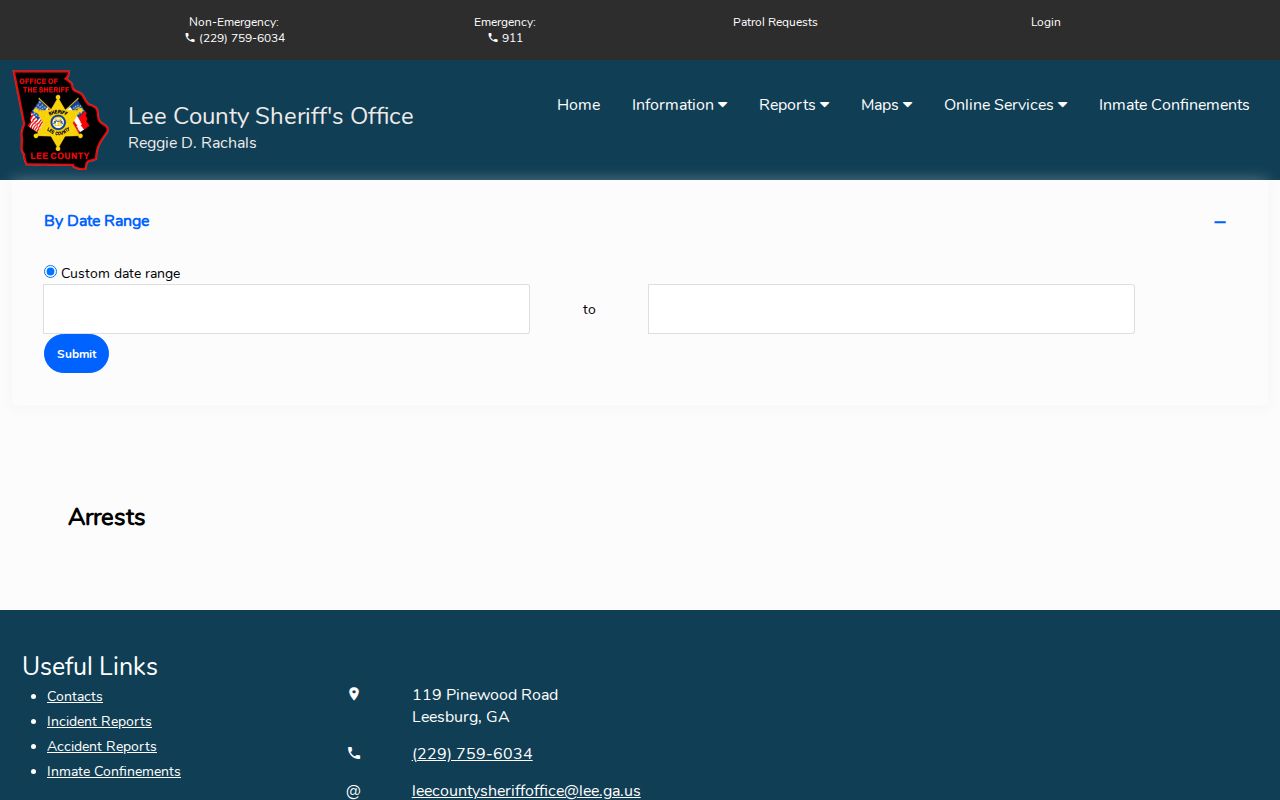
That search form pinpoints a dated arrest without treating the seven-day list as a permanent archive.
Lee Arrest Log Entry Fields
Read the fields together. A name alone may not separate two records. The booking number, dates, charge, bond, and release status on a Lee County card are what pin down the right event.
| Entry field | Meaning in the log |
|---|---|
| Name and booking number | The public identity label and Lee County intake reference. |
| Age, race, and sex | Descriptive fields that may help distinguish similar names. |
| Admit date | The date jail intake was entered. |
| Arrest date and time | The reported arrest event, which can precede admission. |
| Arresting agency | The sheriff, a city police department, or another listed agency. |
| Charge and charge count | Accusations recorded at booking, not final findings. |
| Bond | A pretrial condition. |
| Release status or date | A jail status event, not a dismissal or case disposition. |
| Photo or placeholder | A photo may appear if supplied; no image is guaranteed. |
A gray no-mugshot placeholder means just one thing. The public result simply did not include a photo. It is not proof that no booking photograph exists in any agency file.
Released Entries in Lee Arrest Logs
A released badge is why the seven-day view answers a different question. Say a family member checks Current Confinements. After release, no match shows up. The weekly log, though, can still hold that booking. It may even record the release event with its own date. Someone still confined, on the other hand, may have entered the jail before the weekly window began. For the case itself, go to the courts. Superior Court holds the later criminal-case record. Magistrate Court handles early steps like bond and preliminary hearings, though it is not the court of record. So lean on the court route for the result. Lean on the booking card for the jail event.
Lee Daily Report Adds Context
Citizen Connect also offers a broader Daily Report. Tabs cover All, Incidents, Arrests, Accidents, Bookings, Most Wanted, and Missing Persons. This is no copy of the seven-day booking view. It mixes record types. Incident and accident details may take up to 72 hours to appear, a warning shown on the official Daily Report screen with its separate tabs.
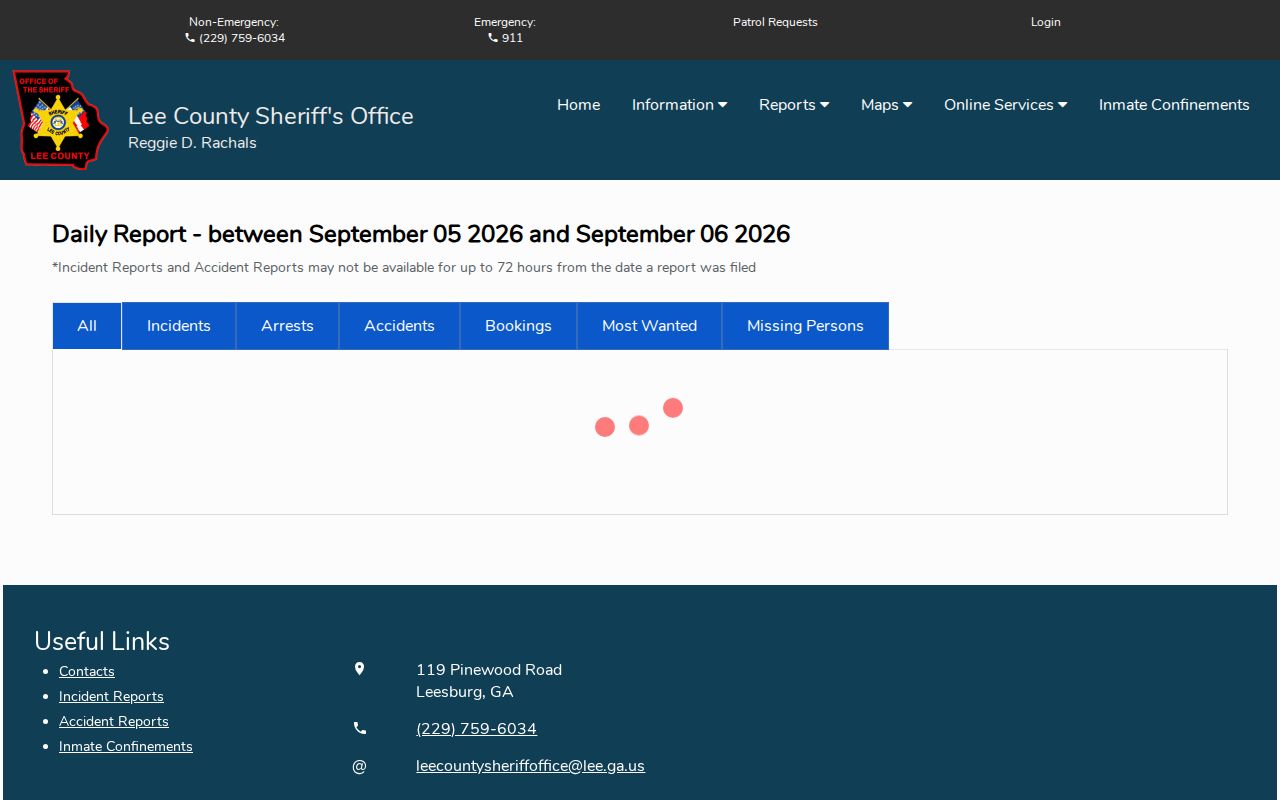
The broader report adds context, not replacements. Use Daily Report to hunt a related incident or arrest item. Then compare it with the booking card. A booking alone does not make an incident report complete. The 72-hour lag covers incident and accident information only. The county posts no set schedule for weekends or holidays, so revisit the source if a known event is absent.
Lee Weekend Arrest Log Timing
Seven days covers a weekend or holiday nicely. It keeps several booking days from across Lee County in one view. The county promises no special weekend refresh, though. A Monday search may shift as data lands. Write down the dates and the time you checked. Then revisit the official source if a known arrest is missing. News outlets can fill in the story. WALB can add narrative to a major operation, bond development, or court follow-up, but it is a chronology rather than the sheriff's record. The Ledger posts no online arrest roster. The Albany Herald has no Lee County booking feed. News explains what an agency reported; it cannot establish current custody, and the WALB Lee County news index shows dated local reporting that supplements the official log.
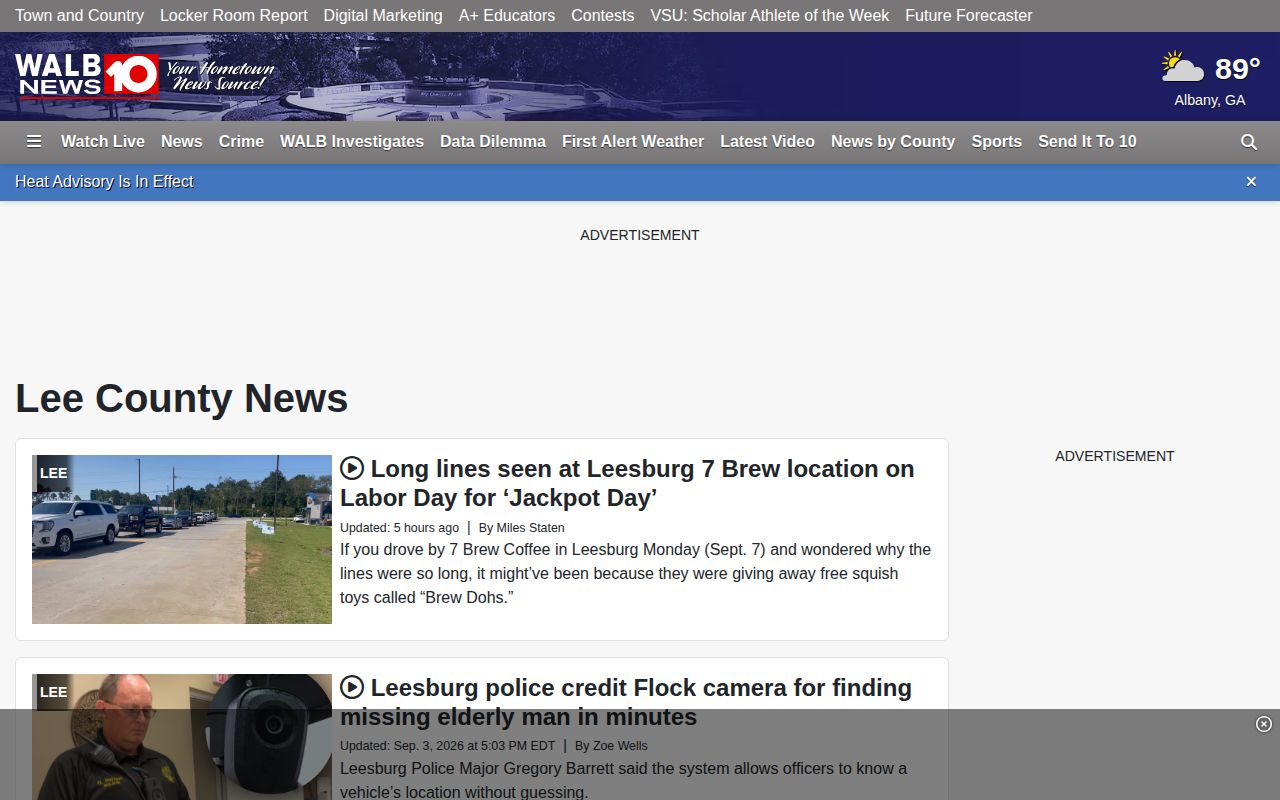
Local news helps with follow-up, while Citizen Connect stays the first booking source.
Older Lee Arrest Record Limits
Citizen Connect caps a custom date range at 31 days. That is just a query limit, though. It does not mean older Lee County arrest records were destroyed. When your search window stretches further back, break it into separate blocks. Run each one. If an arrest record falls outside the public window, the sheriff can still help. File a request through the NextRequest portal. Ask for the booking record, register entry, and any release or transfer record by name, booking number, and date range.
Georgia's local retention schedules set firm minimums. Jail booking records stay on file at least ten years after release. Jail registers last ten years past the final entry. Incarceration lists are kept for one year. Those rules govern what an agency must retain, not what a website shows. Access limits can still block a record even within its retention term. The sheriff remains the first custodian for any Lee County booking request, so start there.
Confirm Lee Arrest Log Results
One weekly card only proves what the public booking source reports. Always cross-check Current Confinements. See who is actually in county custody right now. For the newest rolling window of arrests, the Daily Arrest Report is the better fit. A transfer to Georgia state prison shows up in the Department of Corrections offender search. Later charges or court outcomes belong in the court file, not the arrest log. Treat dates, bond amounts, release times, and booking photos in source-based terms. Report what the record says. Say nothing more.
Public Record Search
Sponsored Results