
Lee County Recent Arrest Views
The Lee County Sheriff Citizen Connect booking search is the place to start. It splits its views several ways. Choose Last 24 hours, Last 7 days, a custom range, or Current Confinements. Someone released after booking can still show up in a recent window. The roster, by contrast, is a moving snapshot. It shows people in custody at that moment. Citizen Connect also offers a separate Arrest Search and a Daily Report. Nothing official promises that. An arrest may not post the instant it happens.
| View | Question answered | Limit |
|---|---|---|
| Last 24 hours | Who entered the rolling same-day feed? | Intake processing can delay display. |
| Last 7 days | Which bookings appeared during the week? | Released people may remain. |
| Current Confinements | Who is shown in custody now? | Not a history of all arrests. |
| Arrest Search | What arrest appears by date? | A separate results screen. |
The Daily Arrest Report handles same-day lookups. For the broader blotter and archive route, the Weekly Arrest Log fits better. Each page points to the correct Citizen Connect window. Neither treats a single feed as the whole picture. The official sheriff page ties jail operations to the portal.
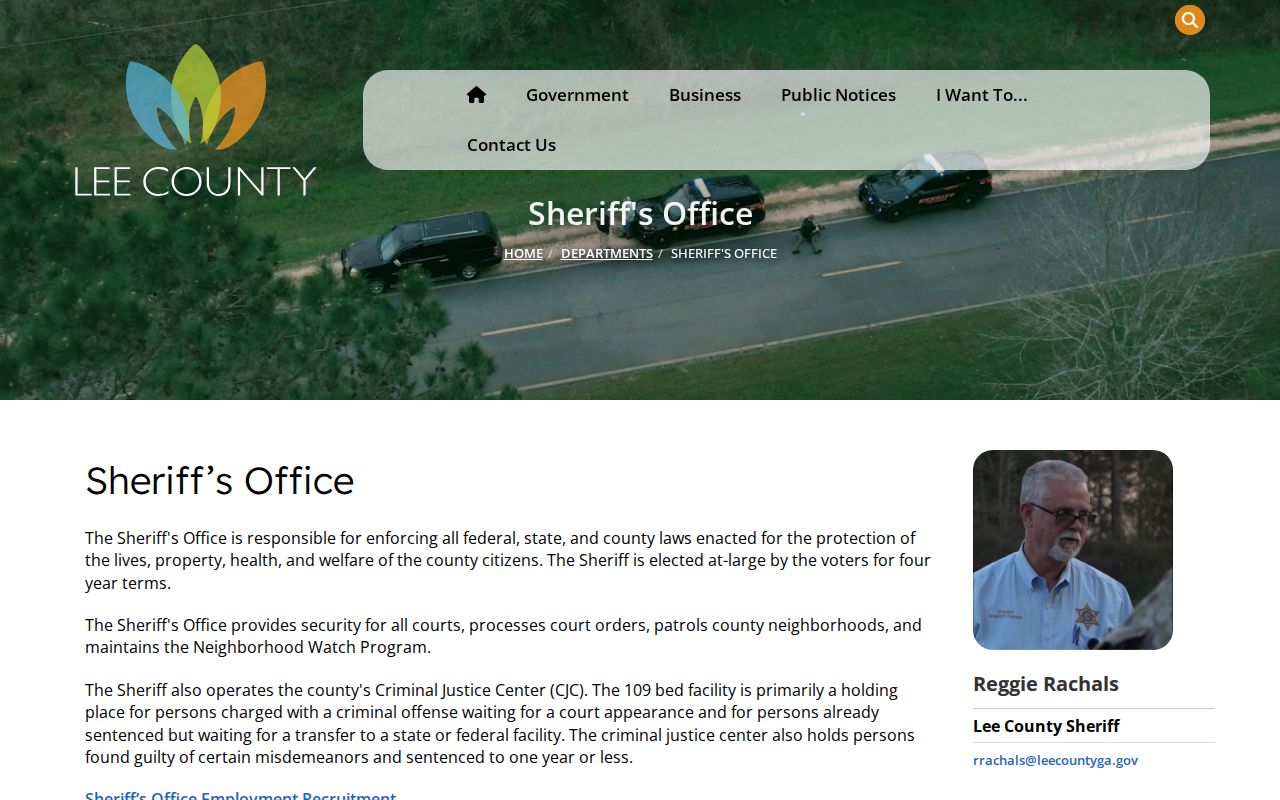
This capture identifies the county source behind the booking and confinement tools.
Search Lee County Arrest Custody
Current Confinements is the roster for county custody right now. It reflects the public status kept by the Criminal Justice Center, a 109-bed jail at 119 Pinewood Road in Leesburg. The sheriff says the facility holds people awaiting court. It also holds people awaiting transfer to state or federal custody. Some people there serve misdemeanor terms of a year or less. A release or transfer can drop a name from the roster fast. The booking record still stands. Citizen Connect filters by charge text and arresting agency, covering the Lee County Sheriff, Leesburg Police, and Smithville Police. That filter matters here. Neither incorporated city runs its own jail roster.
| Control | Use |
|---|---|
| Current Confinements | Limits results to public current custody. |
| Date range | Selects booking dates, up to 31 days. |
| Charge text | Narrows the wording recorded at booking. |
| Arresting agency | Separates county and city agencies. |
| Full details | Opens the fuller public entry. |
Open the official portal and pick the right view first. Search the name. Then test the agency and charge filters. Match booking number, admit date, arrest date, and agency rather than leaning on a photo. No match? Try the recent windows and Arrest Search. For an older, released, or disputed entry, ask the records custodian. The official confinement screen lays out those controls.
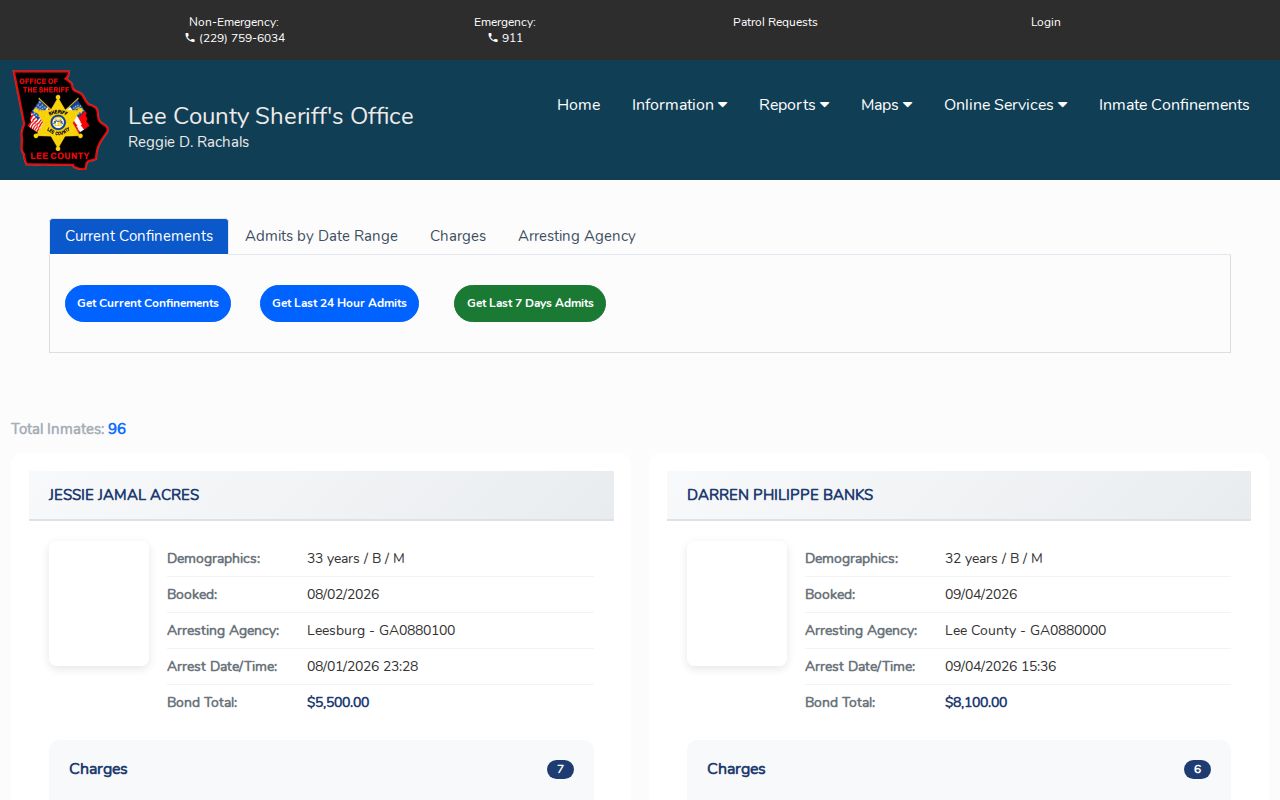
The interface separates live custody from booking history without requiring a gallery.
Lee County Arrest Agency Filters
Lee County has just two incorporated cities. Leesburg, the county seat, is the larger one. Smithville is the other. A city officer's arrest often turns into a county jail booking, so the city name traces best through the arresting-agency filter. The Leesburg Recent Arrests page walks through the Police Department report route. Smithville Recent Arrests keeps the conflicting official phone listings and explains why the county portal stays the practical feed. There is no third city to cover.
Where Lee County Arrests Appear
Official sources come first. A booking feed records the arrest at intake, a court file records the case events that follow, and news adds context. Third-party pages can lag. They may omit releases, keep stale material, or blur arrest dates with publication dates.
| Channel | Photo | Role |
|---|---|---|
| Citizen Connect | When supplied | Official county booking source |
| Sheriff NextRequest | Request if releasable | Official records route |
| Georgia DOC | When available | State prison, not county jail |
| WALB | Story dependent | News requiring verification |
| RecentlyBooked, Busted, Mugshots.com | Often | Unofficial and potentially stale |
WALB's Lee County index covers arrest operations, bond updates, and court follow-up. The Lee County Ledger carries no public current roster. The Albany Herald reports selected regional cases. None of these replaces a booking card or the court record. RecentlyBooked's Lee County section is an unofficial aggregator whose displayed update sits far behind. It can point you toward a name. It certifies nothing about identity. Present custody and case outcome stay unknown too.
Lee County Arrest Record Fields
A Lee County booking record takes shape the moment a person enters the jail. Citizen Connect can bundle identifiers, dates, the arresting agency, charges, bond, and custody events into one arrest file. The police report and court file remain separate records, and each may word things differently.
| Field | Meaning |
|---|---|
| Name and booking number | Identity and jail transaction shown |
| Admit and arrest dates | Separate times that may differ |
| Arresting agency | Agency attributed by the card |
| Charge and count | Charges recorded at booking |
| Bond | Pretrial release condition |
| Release status | Custody event in multi-day results |
| Booking photo | Image only when supplied |
- Booking
- Administrative jail intake after arrest.
- Bond
- A condition that may allow pretrial release.
- Arraignment
- A hearing addressing charges and plea.
- Disposition
- The recorded court outcome.
- Record restriction
- Georgia’s process for limiting eligible criminal-history access.
Lee County Mugshots After Arrest
Booking cards in Lee County do not all look the same. Some carry a mugshot. Others show a plain placeholder instead. A missing image can come from availability limits, local display policy, or state law. It never means the arrest did not happen. The phrase you will often see, "photo if available," says exactly that. No booking photographs are rehosted on this page.
A case can move past sentencing into state prison. The Georgia Department of Corrections Find an Offender search is the record to check. It sometimes shows a photo. Just remember it is a prison database, not a Lee County arrest roster. A county booking record for someone released stays with Citizen Connect, the custodian. The court file stays there too. The official offender-search screen shows where that custody level begins.
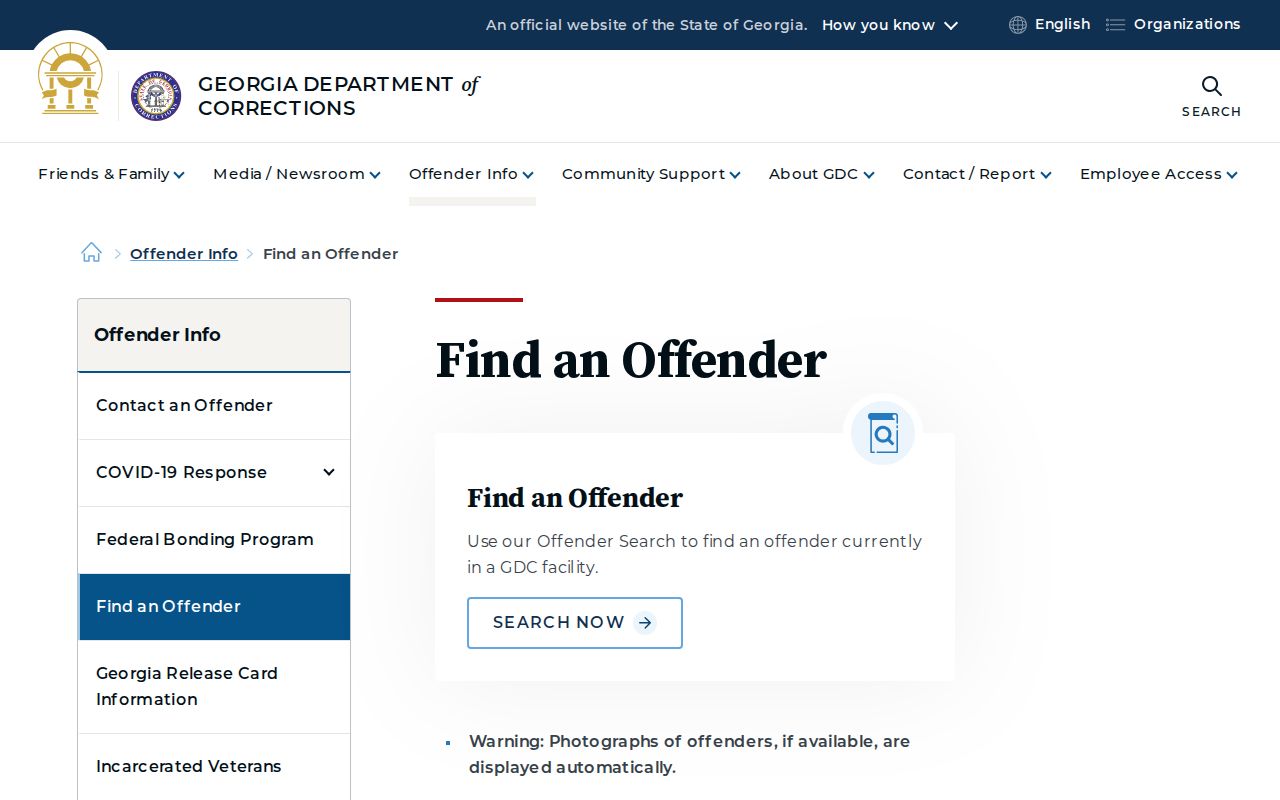
Its fields should not be confused with county booking-photo policy.
Request Lee County Arrest Records
Lt. Sean Getek serves as the sheriff's Records Custodian and Open Records Officer. The sheriff NextRequest portal takes requests, tracks correspondence, and can deliver documents electronically. The office publishes no flat fee or dedicated photo form. So ask for an estimate first.
- Identify the person, dates, agency, and booking number if known.
- Ask for the booking record, register entry, release or transfer record, and associated photo if legally releasable.
- Submit through NextRequest and retain the request number.
- Review the cost estimate, timeline, redactions, or questions.
- Route E-911 material elsewhere because the sheriff does not maintain it.
Georgia's open-records framework generally calls for a response within three business days. Otherwise the agency owes an explanation and a timeline. That deadline does not promise every field is open. It does not promise production finishes in that window either. Investigative, juvenile, medical, security, and protected personal material may be withheld. The official request workflow shows the trackable route.
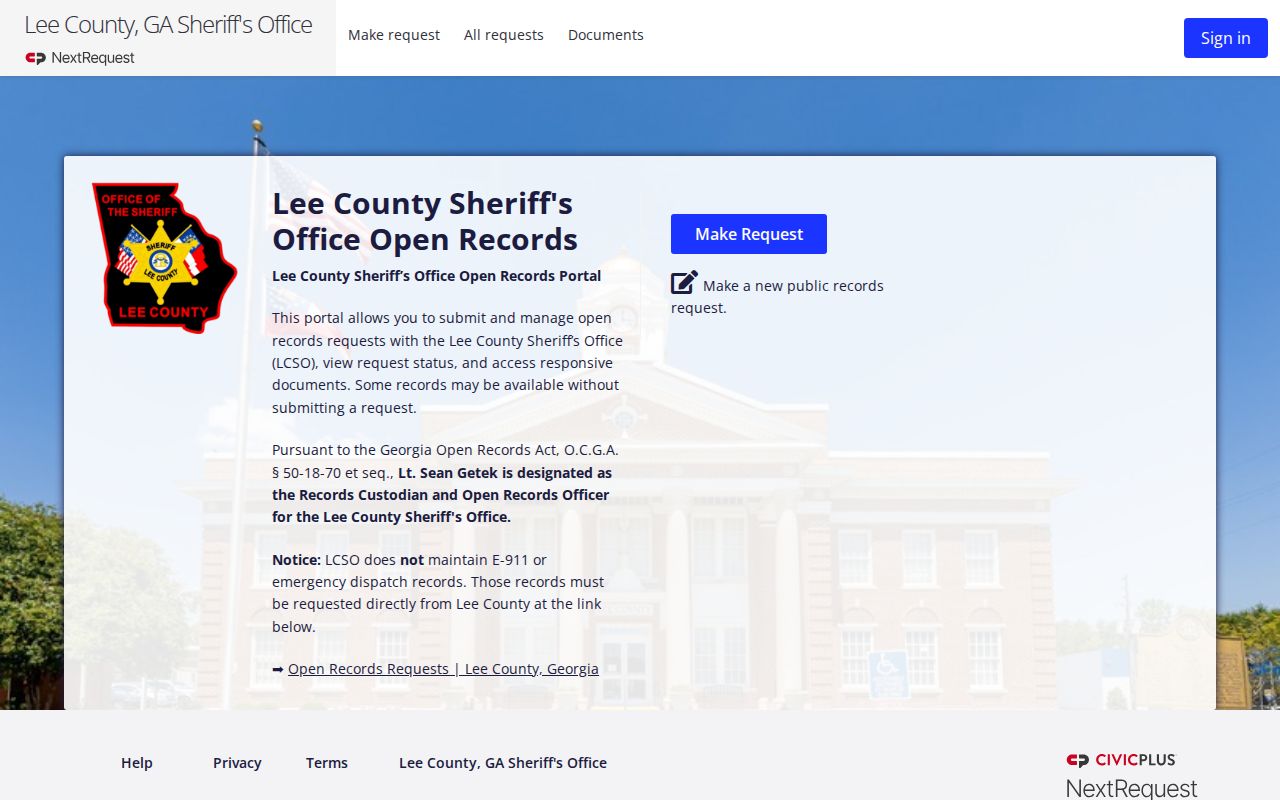
This is the fallback for older or disputed bookings.
Georgia Arrest Photo Law
Georgia keeps its own rules for booking photographs. O.C.G.A. §35-1-19 defines what counts as a booking photo, limits how agencies post them online, and requires a written affirmation from anyone requesting an image connected to a site that charges for removal. Nothing in the statute promises a request will succeed. Correction, restriction, and republisher removal are three different things. GBI guidance walks through O.C.G.A. §35-3-37, and Georgia Courts guidance supplies forms. Eligibility turns on the case and its disposition. Restriction changes who can see a record; it does not erase every copy.
Start with the sheriff, police, prosecutor, or court. RecentlyBooked says its listed correction and removal requests cost nothing. Busted Newspaper uses a documentation-based form, Mugshots.com sets its own contact policy, and paid removal promises deserve skepticism everywhere. These are private claims, not county duties, so verify them before relying on any of them.
Older Lee County Arrest Archives
A 31-day query limit is not a destruction schedule. Georgia Archives sets minimum retention: ten years after release for jail booking records, ten years after last entry for jail registers, one year for incarceration lists, and five years after apprehension for wanted files. Open-records requests themselves stay on file three years. Old does not mean gone. Meeting a retention rule also says nothing about web access, since counties keep plenty of paper offline.
Ask the sheriff for missing jail records. Superior Court or eAccess handles later filings. The Digital Library of Georgia's Lee newspaper archive spans 1901 through 2012, but it holds newspapers rather than a jail booking collection, and no county historical booking archive has been transferred anywhere.
Lee County Arrest Warrants
Citizen Connect carries a Most Wanted listing. It has shown no active persons at times, though that figure shifts and never amounts to a complete warrant index. A blank list clears no one. Wanted, warrant issued, arrested, booked, released, and convicted all mark different statuses. Lee County posts no dedicated online warrant checker. Magistrate Court issues arrest and search warrants and holds bond and preliminary hearings, but it is not the final court of record. Superior Court and its clerk support deeper digging.
Anyone checking a personal warrant should call ahead, ask what identification is required, and consider counsel, since contact can end in custody. To report someone, use tips only. The official Most Wanted module shows the listing and its tip function, and a wanted person should never be approached directly.
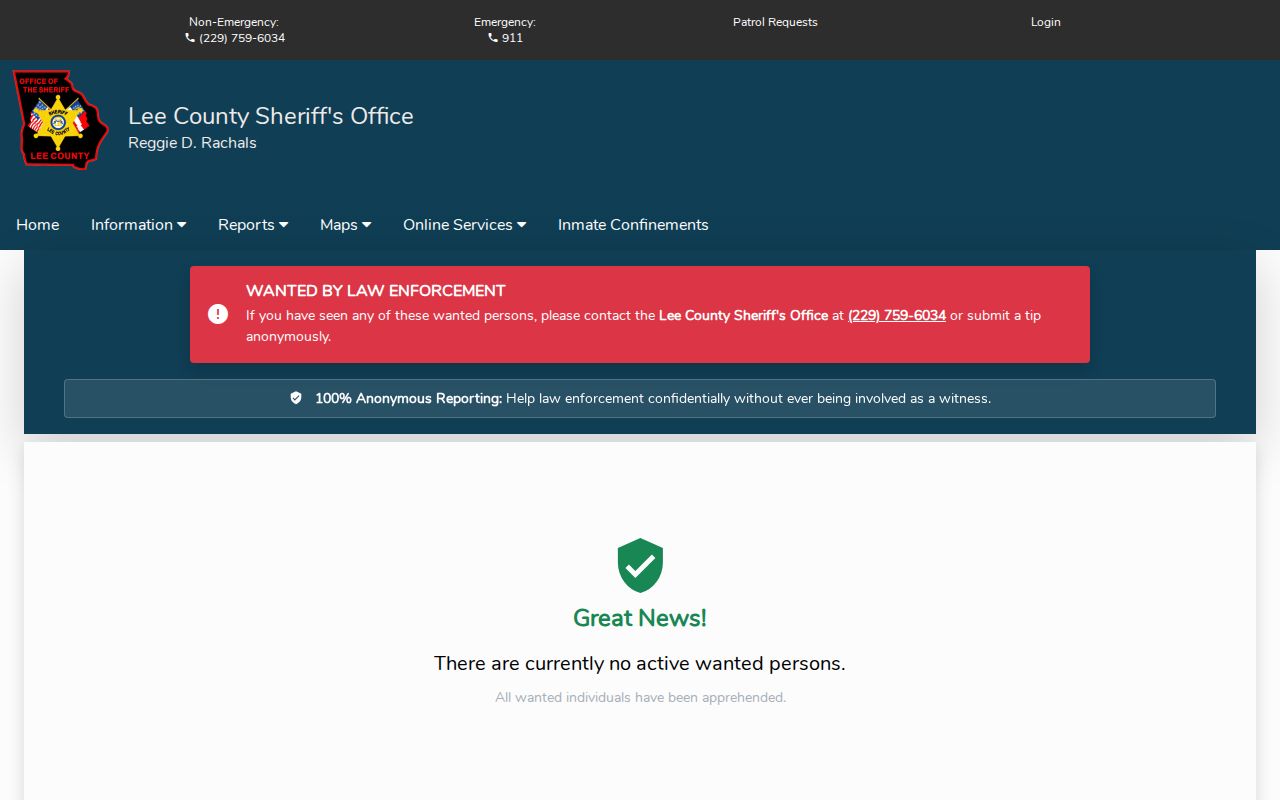
The captured empty state proves only what the page showed then.
After a Lee County Arrest
An arrest follows a familiar path. Booking and a possible photo come first, then an initial hearing with bond, later court events, and a disposition. Magistrate Court handles the early steps. Lee Superior Court is the court-of-record route. Georgia eAccess lists Lee Superior Court among its covered courts. Match booking numbers and dates. The clerk holds the final outcome, and the VINELink Inmate Check explains person matching and alert registration after booking.
State and Federal Arrest Custody
Custody sources shift after a transfer. Citizen Connect covers the county jail, Georgia DOC covers state prison, and the federal Bureau of Prisons locator reaches back to 1982. ICE runs its own locator, and neither federal tool proves the original Lee County arrest.
| Status | First source |
|---|---|
| Just booked | Last 24 hours |
| In county custody | Current Confinements |
| Recently released | Last 7 days or records request |
| Georgia prison | GDC offender search |
| Federal custody | BOP locator |
| Immigration custody | ICE locator |
When Lee County Arrests Appear
Citizen Connect offers a rolling same-day view. Lee County promises no universal posting time. Cards in Last 24 hours can carry a relative elapsed-time badge alongside exact arrest and admit fields, and those two times often disagree. The gap makes sense. The officer arrests first. The jail completes intake later, after transport, identity checks, medical or security steps, and record review. No fixed weekend or holiday schedule exists, so bookings do not appear at a steady interval.
When a reported arrest is missing, check settings first. Confirm Last 24 hours is selected, then widen to Last 7 days and drop narrow filters. Arrest Search works well with the best known date. Agency filters help when Lee County Sheriff, Leesburg Police, or Smithville Police handled the event. Treat them as cross-checks, not completeness guarantees. Daily Report adds incident context but warns that incident and accident details may take up to 72 hours to appear. That warning is not a promised booking delay, just an explanation for why screens disagree.
Log the date, Eastern Time, view, spelling, and range. A changing result count should never be read as an arrest rate. One screen's tally is just a snapshot. It is no stable measure of crime or enforcement. If every public view stays blank, the sheriff's records custodian or the arresting agency can say whether a releasable record exists.
Booked, Released, or Transferred
These labels mark different stages. "Arrested" means an agency took the person into custody under legal authority. "Booked" means intake is done and a record exists. "Released" means the person left that jail's custody through the reported process. "Transferred" means another custodian received the person.
| Observed state | Likely Lee County source | Cross-check |
|---|---|---|
| New arrest and intake | Last 24 hours | Compare arrest and admit times |
| Still held locally | Current Confinements | Confirm live jail status |
| Released after booking | Last 7 days or requested release record | Check court outcome |
| Moved to state prison | Georgia DOC search | Match identifiers and sentence |
| Moved into federal custody | BOP or relevant federal agency | Do not infer from county absence |
A name can vanish from Lee County's Current Confinements list while the seven-day booking record stays up. The arrest still counts. Release is just a custody event. Bond sets pretrial conditions. Disposition lives in the court file alone.
The Lee County jail also holds people awaiting state or federal transfer. Once moved, the receiving custodian controls the record. Georgia DOC tracks state prisoners, the Bureau of Prisons locator covers federal inmates, and ICE runs its own system. None of them replaces the county booking record.
Request a Lee County Booking Photo
The public booking interface shows a photo for some Lee County records. Others display a placeholder. So a booking photo may appear when the public record includes one. Nothing more is promised. A missing image may never appear. A visible image is not free to copy.
For a formal copy, file through NextRequest and name the exact record. Give the person's name and a narrow arrest or booking range. Add the booking number if known. Name the arresting agency. Ask for the booking record and photo "if legally releasable." Request electronic delivery. Get a cost estimate before work begins. Lee County has no separate photo form or flat photo fee. The general county fee schedule is not a quoted price for one image.
O.C.G.A. §35-1-19 defines a booking photograph and limits agency posting and disclosure. An affirmation is required in some circumstances. The custodian may cite an exemption tied to the record. Ask for the legal basis. A private publisher's photo does not obligate Lee County to release the same file.
Route Lee County Court Questions
Jail and court records answer different questions, and the booking card holds the jail-side facts. Lee County Magistrate Court handles arrest warrants, search warrants, bond hearings, and preliminary hearings. It is not a court of record. Lee Superior Court keeps the criminal cases and warrants. That makes it the stronger route for later case research. Georgia Courts eAccess lists Lee Superior Court. Its account and provider workflow is not a free, instant, unrestricted docket.
Match the question to the office. The sheriff handles admit time, booking number, release, and transfer. Any public photo belongs there too. The arresting officer's narrative sits with that police or sheriff records unit. Bond and preliminary matters start with Magistrate Court. Final charges, pleas, dismissals, and sentences belong with the clerk. All other dispositions belong with the court file.
- Record the exact name, arrest date, booking number, and agency shown by Citizen Connect.
- Compare booking fields with the arresting-agency report rather than assuming identical wording.
- Contact Magistrate Court for its early-hearing role when the question concerns bond or preliminary process.
- Use the Superior clerk or eAccess route for later events and disposition.
- For possible restriction, follow official prosecutor, GBI, and Georgia Courts instructions instead of treating a roster change as expungement.
"Nolle prosequi" means the prosecutor dropped the charge. "Acquittal" means the person was found not guilty. "Conviction" requires a court outcome, not a booking entry. Each term must come from the court record or solid reporting on it. No headline, private booking page, or blank roster can supply that proof.